Enterprise change has never felt more urgent, or more exhausting. Deloitte's 2026 Global Human Capital Trends report found that 7 in 10 business leaders see being fast and nimble as their primary competitive strategy for the next three years, with success depending on how quickly organizations can orchestrate people, resources, and work around changing priorities.
That reality puts transformation offices in a difficult position: they are expected to create clarity whereas the business keeps moving.
Key Takeaways
- Enterprise transformation office software helps organizations plan, govern, track, and measure large-scale change programs.
- The most important capabilities include strategic alignment, portfolio orchestration, governance workflows, dependency management, executive dashboards, analytics, and value tracking.
- The right solution should support hybrid delivery, real-time reporting, integrations, and clear visibility from strategy to execution.
What Does Enterprise Transformation Office Software Do?
Enterprise transformation office software helps organizations translate strategy into coordinated execution.
It gives transformation leaders a way to capture initiatives, prioritize them, assign ownership, track delivery progress, manage dependencies, and measure business impact. Instead of relying on static status decks or manually updated spreadsheets, the transformation office can work from live portfolio data.
This matters because transformation work rarely follows one clean plan. A single program may include technology modernization, process redesign, cost optimization, workforce change, automation, and compliance requirements. Good software brings those moving parts into one shared view.
It helps leaders answer practical questions about the progress of important initiatives, programs at risk, dependencies that are slowing down the process, and whether deliverables bring measurable value or are just completed activities.
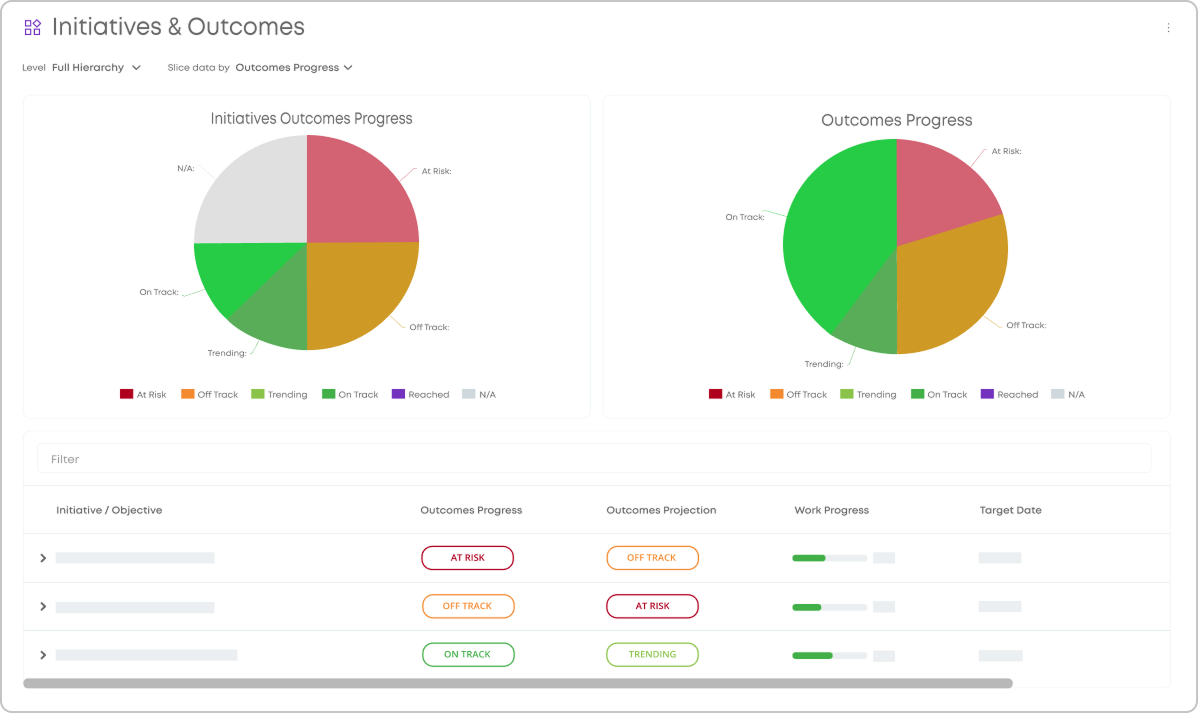
Businessmap's Initiatives & Outcomes dashboard: visibility into initiatives, outcomes, progress, and ownership
What Tools Does an Enterprise Transformation Office Need?
An enterprise transformation office usually needs several connected capabilities, even when they exist inside one platform.
The goal is to create a connected transformation management system where leadership can see the full path from strategic intent to measurable results.
Core capabilities include:
For example, Businessmap can support this by connecting strategic objectives, portfolios, initiatives, workflows, dependencies, automation, and analytics in one environment. That makes it easier for transformation leaders to manage change without forcing every team into the same delivery model.
How Does Enterprise Transformation Office Software Support Change Programs?
Transformation programs depend on coordination, and transformation office software supports change programs by giving every initiative a clear structure.
Leaders can define the expected outcome, connect it toward strategic goals, assign accountable owners, map related workstreams, and monitor progress across teams.
For example, a cost optimization program may include procurement changes, process automation, vendor consolidation, workforce planning, system upgrades, and policy updates. Each workstream may move at a different pace. Some may depend on legal approval. Others may depend on IT capacity or business adoption.
How Does Software Improve Transformation Governance?
Transformation governance improves when decision-making becomes visible, timely, and connected to real work.
We often run into governance that is driven by committees and monthly reports. While those are useful, they are often too slow to keep up with fast-moving change. By the time a risk becomes apparent, the delay may already be costly.
Enterprise transformation software improves governance by standardizing how work enters the portfolio, how decisions are made, how risks are escalated, and how progress is tracked. They make the current state of transformation visible enough for leaders to act.
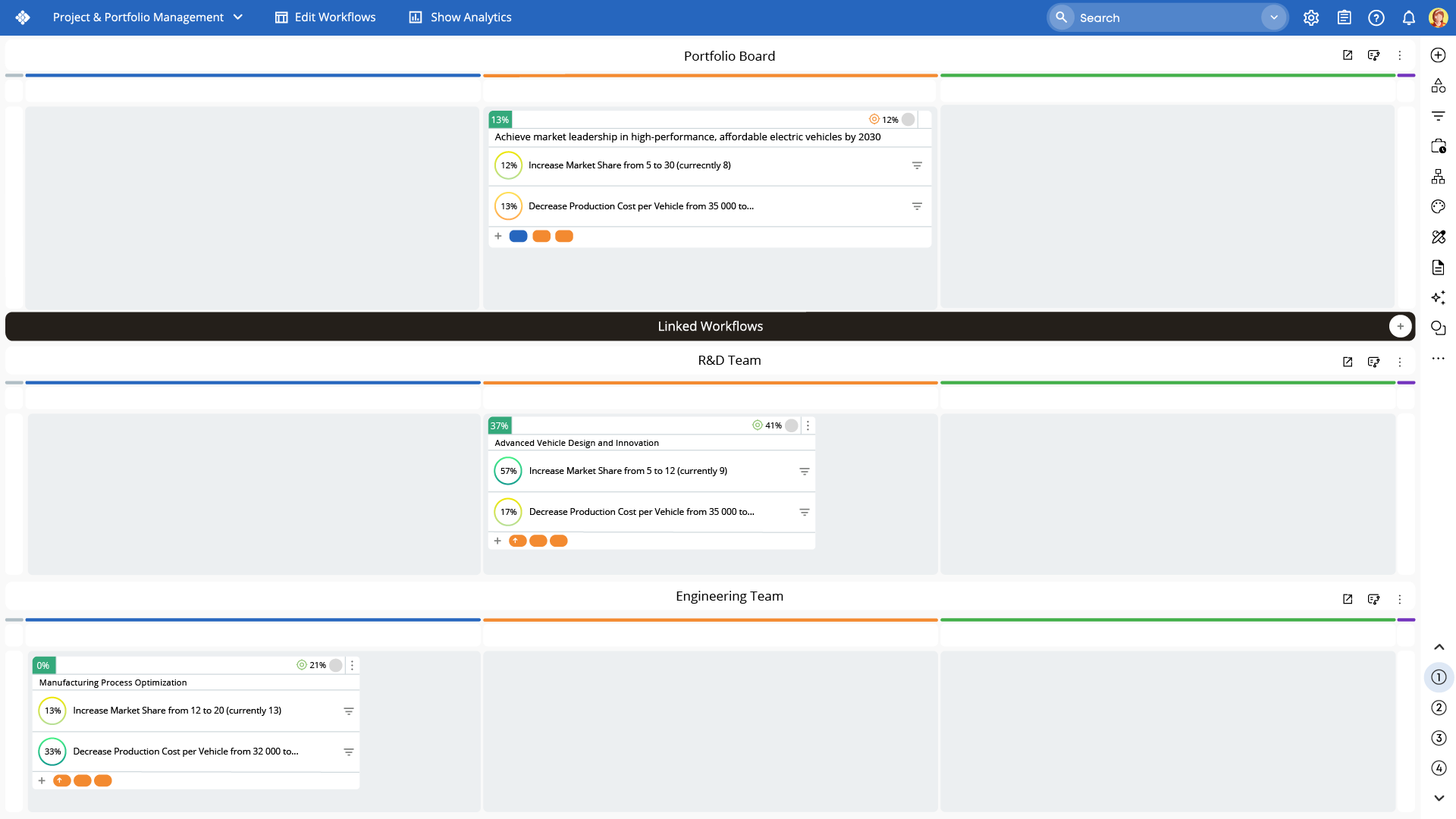
Visualizing a ppm board with top-level initiatives and connected team workflows
How Does Transformation Software Support Strategic Alignment?
Strategic alignment means the organization's resources, initiatives, and execution capacity are moving toward the priorities that matter most.
Transformation software supports this by connecting enterprise goals to portfolios, initiatives, programs, teams, and measurable outputs. This creates traceability from board-level strategy to operational delivery.
Without that connection, transformation portfolios can become crowded with work that looks important but does not support the strategy. Teams stay busy. Budgets are consumed. Yet the organization struggles to explain which strategic targets are actually advancing.
Businessmap is useful in this context because it allows organizations to connect strategic objectives with portfolios and execution boards. Transformation leaders can see how work flows from high-level goals into day-to-day execution, and where misalignment or overload may appear.
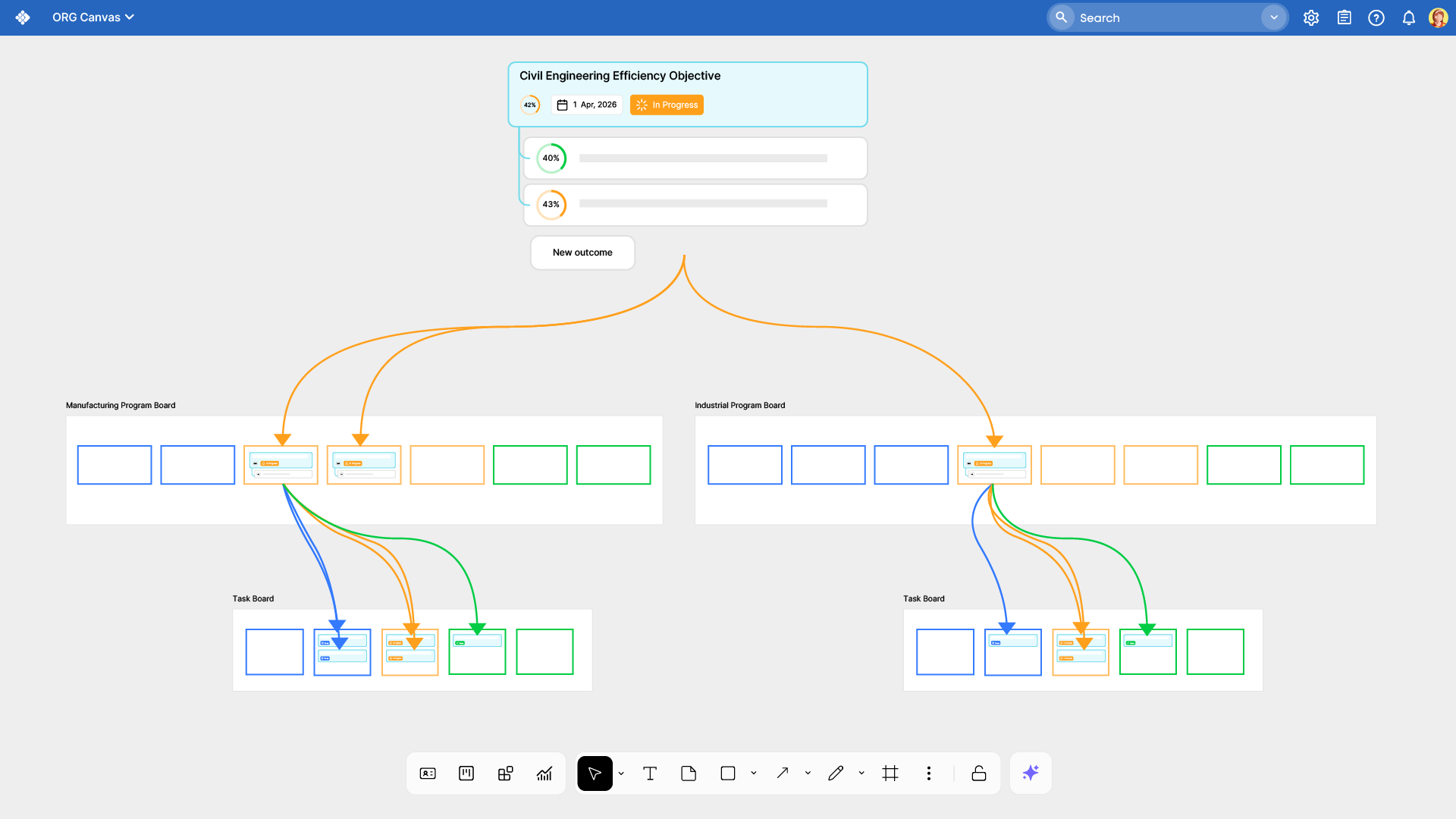
Visualizing strategic alignment from company goals to specific programs, initiatives, and execution work on a Canvas board
What Reporting and Dashboards Do Transformation Leaders Need?
Transformation reporting should answer three questions quickly: Are we working on the right things? Are those things moving? Are they creating value?
Useful dashboards include strategy execution, portfolio health, value realization, dependencies, capacity, and executive decision dashboards. Each one gives leaders a different signal.
- A strategy execution dashboard shows whether initiatives support enterprise goals.
- A portfolio health dashboard highlights progress, risk, blockers, and aging work.
- A value realization dashboard compares planned benefits with actual outcomes.
- A dependency dashboard reveals where one team, decision, system, or vendor may delay another.
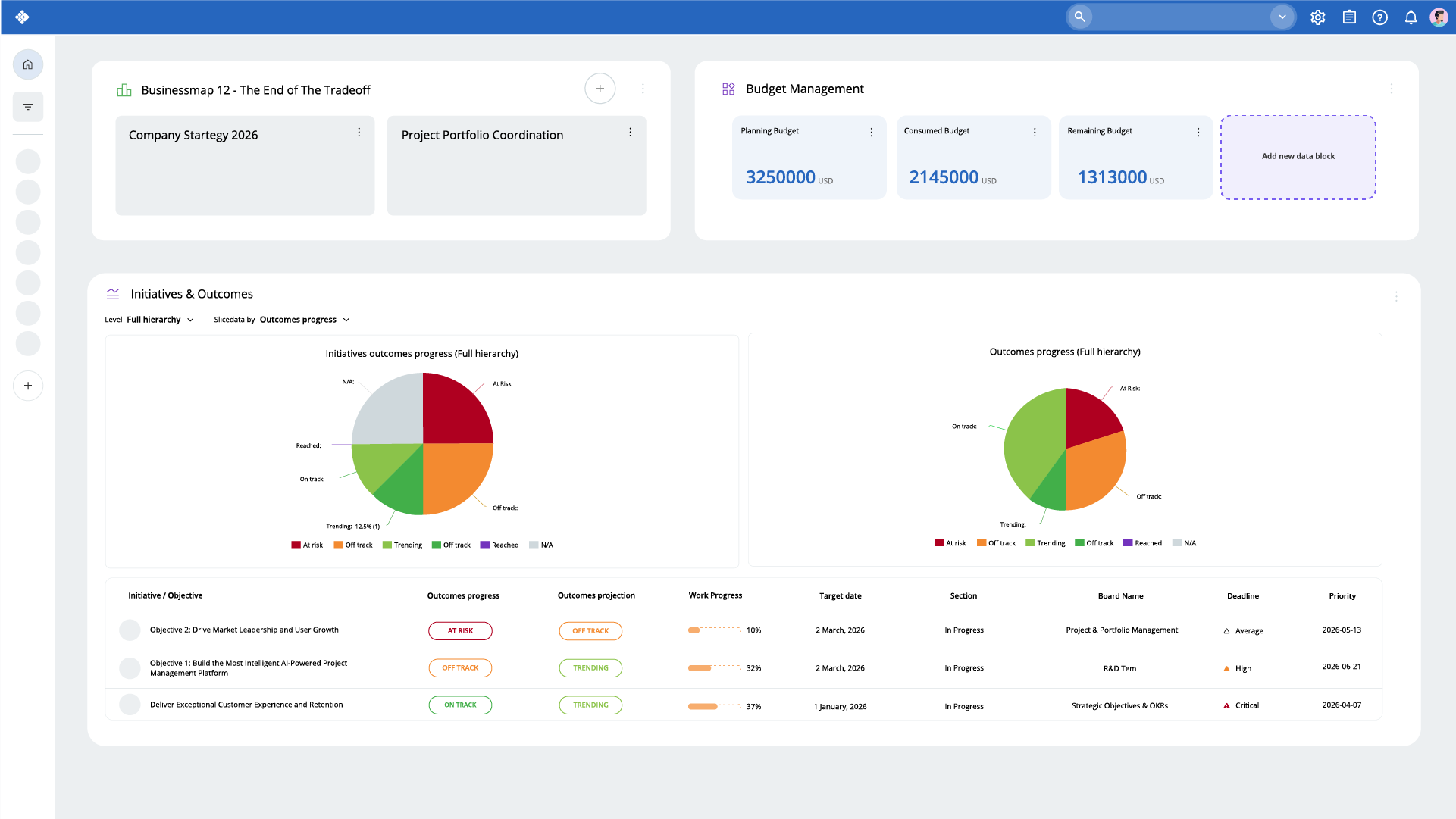
Visualizing key metrics and portfolio initiatives progress using Businessmap widgets
How Does Transformation Software Handle Dependency Management?
Dependency management helps transformation offices see where one initiative, team, system, vendor, or decision affects another.
This is critical because transformation delays often come from hidden dependencies. A process redesign may depend on a system change. A customer experience initiative may depend on data cleanup. A technology rollout may depend on training, legal approval, or vendor readiness.
Paradise Mobile's experience shows why dependency visibility matters in real work, not just in theory. In a live case study, CTO and co-founder Zlatko shared how their teams use Businessmap to see upcoming network changes before they collide, giving people space to ask, "Will this affect your work?" before risk turns into delay.
Watch the full conversation below for a practical look at how visual work management supports cross-departmental coordination.
How Does Transformation Software Support Hybrid Delivery?
Enterprise transformation rarely follows one delivery model.
Technology teams may use Agile. Operations teams may use Kanban. PMO teams may use milestones and stage gates. Vendors may work through contracts and deliverables. Executives may care mainly about outcomes, risks, and financial impact.
How to Choose the Best Tools for Your Enterprise Transformation Office
Use these questions as a practical checklist:
- Can the tool connect strategy to execution?
- Can it show portfolio-level visibility across initiatives?
- Can it support hybrid delivery?
- Can it track value realization?
- Can it manage dependencies across teams and programs?
- Can executives drill down from dashboards into actual work?
- Can it integrate with delivery, finance, BI, and collaboration systems?
- Can it automate reporting?
- Can teams use it without creating unnecessary administration?
Build a Connected Transformation Operating System
The best tools for an enterprise transformation office help leaders connect strategy, execution, governance, dependencies, and measurable value.
They reduce the distance between what leadership wants to achieve and what teams are actually delivering. They also help transformation offices move away from manual reporting and toward real-time decision support.
For organizations directing complex transformation portfolios across hybrid teams, Businessmap is worth considering as a flexible way to connect strategic synchronization, portfolio orchestration, execution workflows, dependency management, analytics, and automation.
See how strategy, portfolios, initiatives, dependencies, and analytics can work together in one connected transformation management system.

Michaela Toneva
Kanban & Agile Practitioner | SEO & Content Creator
With a never-ending thirst for knowledge and a passion for continuous improvement, Michaela is an Agile practitioner with a good understanding of Kanban, Lean, and Agile methodologies. Her professional background includes SEO and content writing with a dose of sales and a pinch of social media.