Businesses use project portfolio management software to see which projects matter, where work is blocked, and whether teams have the capacity to deliver.
The best PPM software for UK organizations should support portfolio visibility, prioritization, governance, security, and reporting in one place.
Key Takeaways
- Businesses use PPM software to centralize project data, prioritize strategic work, manage capacity, and improve governance.
- UK buyers should assess PPM tools against security, auditability, UK GDPR expectations, data export, and enterprise access controls.
Why Do Businesses Use PPM Software?
Businesses use PPM software to create a shared view of projects, programs, initiatives, resources, risks, and outcomes.
PPM software reduces that noise. It helps leaders see what is planned, what is active, what is blocked, and what needs a decision.
For organizations managing transformation, compliance projects, IT portfolios, product delivery, or operational improvement, this visibility is essential.
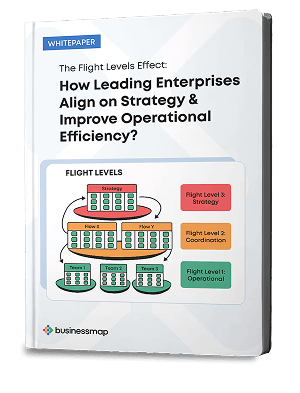
Businessmap fits this need because it connects portfolio planning with daily execution. Leaders can use portfolio workspaces, management boards, team boards, outcomes, workflow analytics, and dashboards to see how strategy moves through the organization.
What Should UK Buyers Look for in PPM Software?
UK buyers should look for PPM software that improves decisions, not just project administration.
- The essentials include portfolio visibility, strategic synchronization, resource and capacity planning, workflow governance, dashboards, reporting, integrations, and data security.
- For enterprise teams, the platform should also support access control, audit records, export options, and clear administration controls.
- The most important test is usability. If teams do not update the system, leadership reports become unreliable. A good PPM platform should make work easier to manage at the team level while giving executives enough structure to govern the portfolio.
Buyer evaluation checklist
- Portfolio visibility
- Capacity planning
- Governance workflows
- Data security
- Integrations
- Reporting
What UK Compliance Features Do You Need in PPM Software?
PPM software does not make an organization compliant by itself. It should provide the controls and records that help teams operate in a compliant way.
Core compliance features include:
UK-specific considerations usually center on data protection and supplier risk. Organizations handling personal data need to understand their responsibilities under the UK GDPR and the Data Protection Act 2018.
Enterprise buyers usually ask:
- If access can be restricted by team, portfolio, or workspace
- If they can see who changed important work items
- If SSO is available
- Data export options questions
- Reporting capabilities
Can Cloud-Based PPM Software Meet UK Data and Security Expectations?
Yes. Cloud-based PPM software can meet UK data and security expectations when the vendor provides strong hosting, encryption, access controls, auditability, and clear data processing terms.
Businessmap is a strong example of this model. Its standard setup runs on secure multitenant infrastructure hosted on Amazon AWS. For organizations with advanced enterprise requirements, Businessmap also offers dedicated infrastructure, where an isolated environment is provisioned for one organization.
This can support needs such as performance separation, infrastructure customization, IP whitelisting, database replicas for reporting, and regional AWS deployment requirements.
For UK organizations, this creates a practical middle ground: the flexibility of cloud PPM with stronger enterprise control when needed.
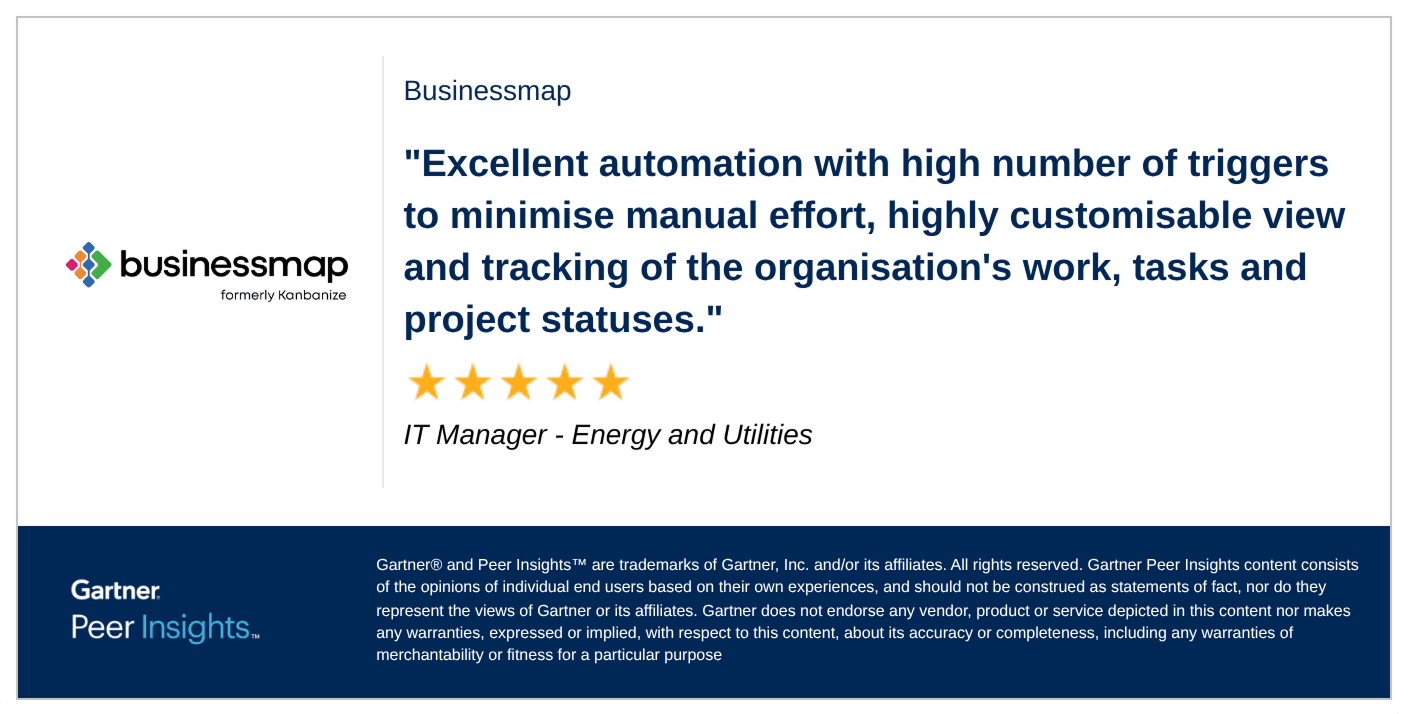
Businessmap Gartner Peer Insights review
What Are the Best Project Portfolio Management Tool in the UK?
The best PPM software for UK businesses depends on portfolio maturity, governance needs, delivery model, and integration requirements.
How Has Businessmap Been Used in UK Pharma?
AstraZeneca provides a useful pharma example of how Businessmap can support regulated, high-pressure operational work.
In a quality control lab environment, work was traditionally pushed into schedules based on people’s availability. That made planning fragile. If a specialist was unavailable or urgent testing appeared, leaders had to reshuffle work and intervene.
By moving toward a pull-based system, teams could organize work in a queue and pull the next item based on capacity, priority, and availability. Businessmap helped make that flow visible. Teams could see what work was active, what was waiting, and where bottlenecks appeared.
Which Teams Can Benefit Most from Businessmap?
- Businessmap is well-suited for enterprise PMOs that need a live view of strategic work. Instead of collecting updates manually, PMO leaders can see portfolio work across teams and use dashboards to focus governance discussions on risks, progress, and flow.
- Transformation teams can use Businessmap to connect large change initiatives with outcomes and execution boards. This is useful when work spans departments and the real risk sits in dependencies, handoffs, and overloaded teams.
- Agile and product organizations benefit from workflow analytics, AI-powered performance data analisys and forecasting. These signals help leaders understand delivery capability before approving more demand.
- Continuous improvement teams can use Businessmap to make process problems visible. If work waits too long, gets blocked repeatedly, or flows unevenly across teams, the platform helps expose the constraint.
See how portfolio visibility, AI-powered analytics, governance controls, and cloud-based PPM can support your organization.

Iva Krasteva
Content Strategist | Agile Practitioner | Kanban Certified
Iva is a Kanban-certified Agile expert with hands-on experience in SEO, content creation, and Lean practices. She has published dozens of articles on Lean, Agile, and Kanban practical applications. Iva actively promotes collaborative, flexible work environments and regularly shares process optimization insights through writing.