Asana remains one of the most widely used project management tools on the market. It's praised for its clean interface, broad adoption, and strong task-tracking capabilities. However, it's not always the best solution for every team.
Many organizations start searching for Asana alternatives when they encounter limitations related to:
- scaling projects across teams
- managing complex workflows
- strategic portfolio management
If you're looking for software that offers more flexibility, scalability, or portfolio visibility, several strong alternatives exist.
This guide explores the best Asana alternatives in 2026, comparing their features, pricing, and ideal use cases to help you choose the right solution.
Key Takeaways
If you're evaluating tools similar to Asana, the following platforms stand out for different reasons:
- Businessmap for enterprise project & portfolio management
- Teamwork for agencies and client project management
- Zoho Projects for budget-friendly project management
- Notion for flexible workspaces and customizable workflows
- ProjectManager for resource planning and Gantt-based project management
Why Teams Look for Asana Alternatives
Although Asana is widely used, some organizations eventually outgrow its capabilities.
1. Limited Portfolio and Strategy Management
Large organizations often struggle with translating high-level strategic goals into operational work across teams. As teams scale, they often need:
- portfolio management
- cross-team visibility
- alignment between company strategy and project execution
In fact, research shows that many strategies fail not because they are poorly designed, but because organizations lack mechanisms to track them effectively. Studies indicate that almost 50% of all organizations fail to meet at least half of their strategic targets, often caused by misalignment between strategic planning and operational work.
2. Workflow Customization Challenges
Many organizations operate with unique processes, such as:
- Kanban workflows
- Scrum frameworks
- hybrid agile approaches
- stage-gate processes
Teams may require tools that allow highly customizable workflows rather than fixed project structures.
For instance, during an Agile transformation, leadership can create a portfolio-level board to track strategic initiatives, while individual departments manage their own detailed workflows. Development teams may run Scrum-based boards, operations teams may use Kanban workflows for service delivery, and marketing teams may manage campaign pipelines, all connected to the same portfolio view. This structure allows leadership to monitor progress across departments while teams retain the flexibility to work in the way that best fits their processes. As a result, organizations gain both strategic visibility and operational autonomy, enabling better coordination across complex projects.
3. Need for Better Workflow Analytics
Advanced teams often require analytics such as:
- performance data
- bottleneck detection
- quick insights into efficiency
These insights enable teams to shift from reactive project tracking to continuous process optimization, improving delivery predictability and reducing lead times. AI-powered flow analytics improve organizations' data-driven decisions on priorities, capacity, and process improvements, especially as teams begin integrating solutions such as white-label AI agent platforms like Exei or Botsify or AI workflow automation tools to support automation and decision-making at scale.
Over time, this approach allows teams to deliver work more consistently while maintaining better visibility into operational performance.
Key Features to Look for in Asana Alternatives
When evaluating project management tools to replace Asana, users consistently highlight four important qualities.
Portfolio Visibility
Effective project management tools should provide:
- comprehensive portfolio visibility
- aligning work to project and portfolio goals
- clear dependencies management
The goal is to keep teams aware of strategic goals and align their work to the right priorities at all times.
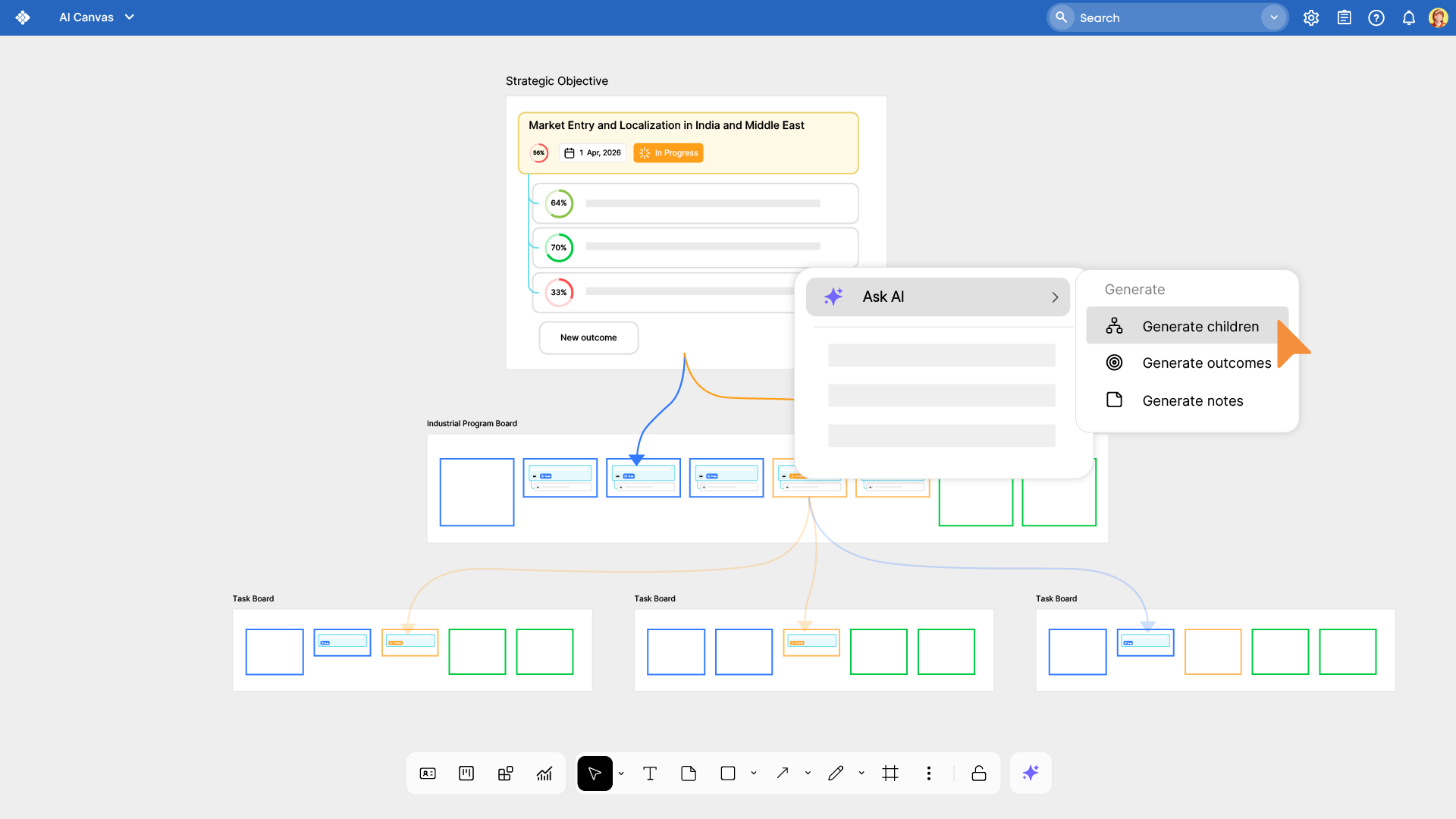 Mapping strategic goals, portfolio breakdown, risks, and dependencies on a Businessmap Canvas board
Multiple Work Views for Flexibility
Modern project management platforms often support multiple project views, such as:
- Kanban boards
- Gantt charts
- Timeline views
- Scrum boards
This flexibility allows teams to manage different types of work on the same platform.
Scalability and Customization
Organizations need tools that grow with them.
Important capabilities include:
- customizable workflows
- work automation
- AI capabilities
- cross-team task management
- integrations with enterprise systems
Cost-Effective Pricing and ROI
Pricing is another key consideration when selecting an Asana alternative.
Organizations often evaluate:
- per-user pricing
- feature availability across plans
- scalability costs for large teams
Top 5 Asana Alternatives Compared
| Views | Important Features | Gartner Peer Insights | |
|---|---|---|---|
| Businessmap | Portfolio, Goals, Workflows, Initiatives, Kanban Boards, Gantt, Timeline, Work Breakdown, Milestones | Native OKRs, automation, analytics, AI tools for reading data, predicting risks, breaking down work, and more | PPM Category: 4.7/5 |
| Teamwork | Workflow List, Table, Boards, Gantt Project view, Portfolio view | Time tracking, reporting, TeamworkAI for client service management, and automating routine tasks | PPM Category: 4.4/5 |
| Zoho Projects | Project Timeline Gantt, Milestone Layout, Project Layout | User hierarchy, Issue tracker, Zoho AI for insights, search, translations | PPM Category: 4.1/5 |
| Notion | Timeline, Boards, Calendar | Notion Calendar, Private Teamspaces, Templates Library, Notion AI for summaries, insights, autofilling a database in bulk | Collaborative Work Management Category: 4.5/5 |
| ProjectManager | Gantt, Sheet, Board, List, Calendar | Project Essentials, Project Templates, Summary Dashboard, AI tools for project insights |
Adaptive Project Management Category: 4.5/5 |
Businessmap: Best Asana Alternative for Enterprise Project & Portfolio Management
Businessmap is a flexible and scalable project and portfolio management platform designed to support teams using Agile, Kanban, Scrum, stage-gate processes, SAFe, Flight Levels, and hybrid methodologies.
It enables organizations to manage work across multiple teams while maintaining visibility into strategic goals and project execution.
Key Features
Strategic Alignment and Portfolio Management
Businessmap connects strategic goals and operational execution using:
- OKRs via Initiatives & Outcomes
- Project portfolios via Project Workspaces
- Executive dashboards
This allows organizations to track how work contributes to company objectives.
Customizable Workflows
Teams can configure workflows based on their existing processes rather than adapting their processes to the tool.
Examples include:
- Scrum boards
- Kanban workflows
- stage-gate processes
- hybrid project management models
Native AI & Work Performance Analytics
Businessmap provides real-time insights into work performance through analytics dashboards and AI tools.
These insights help teams:
- identify risks
- measure delivery performance
- improve team performance and productivity
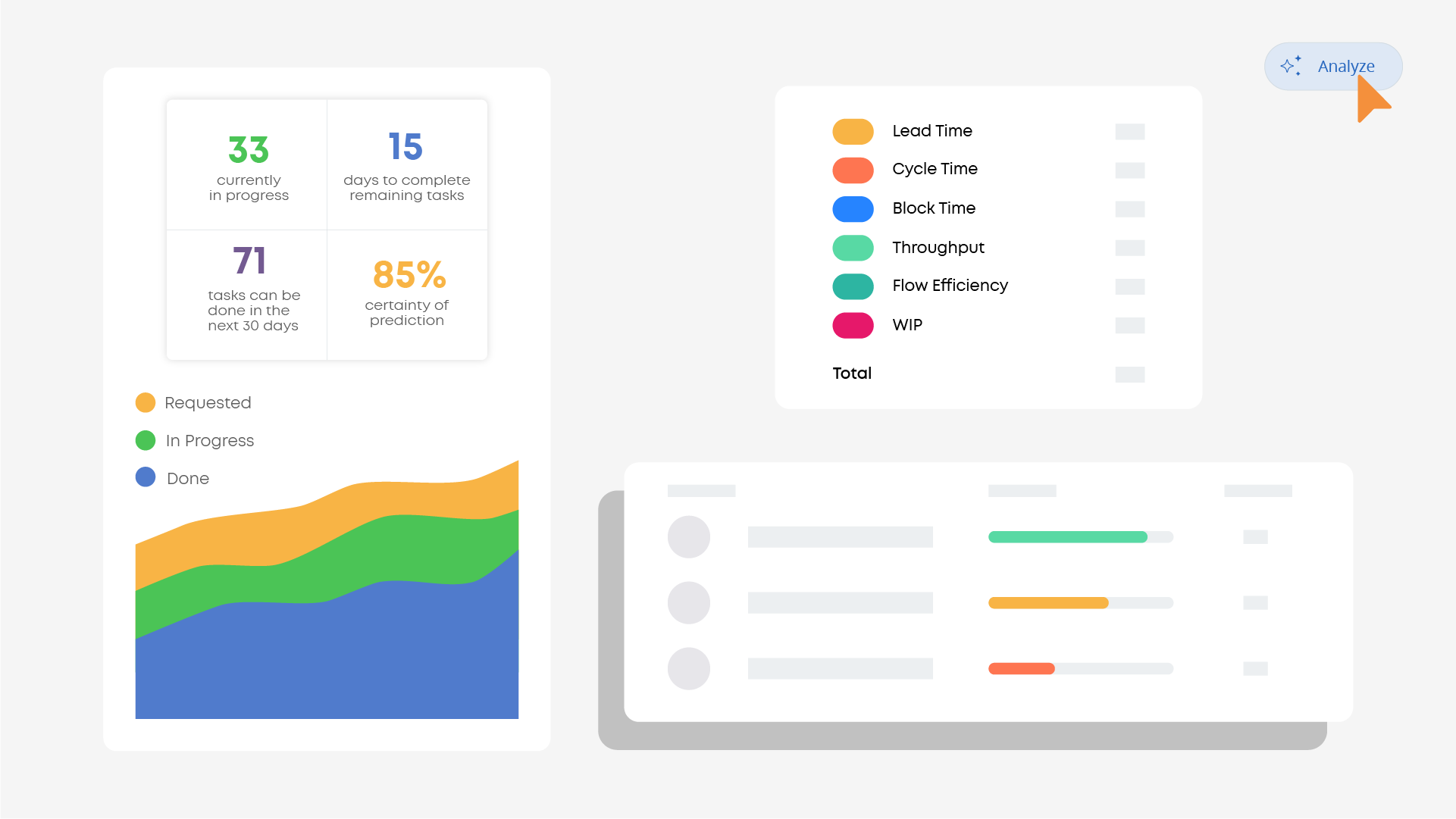 Using Businessmap AI capabilities to interpret work performance in natural language
Automation
Businessmap automation allows teams to eliminate repetitive work and streamline processes.
Pricing: Businessmap pricing is transparent, scalable with fewer required add-ons. Approx. $7/user/month (1,000+ users). Includes portfolio workflows, analytics and dashboards without plugins. Add-ons available for workflow automation and SSO. The tiered subscription plans are based on features and the number of users, with enterprise pricing available upon request. Organizations can start with a 14-day free trial before committing to a full rollout.
Teamwork: Best Asana Alternative for Agencies and Client Work
Teamwork is a project management tool offering teams a way to organize projects, track progress, and collaborate with clients. People praise Teamwork for its intuitive interface, structured project organization, and strong collaboration tools.
It is especially popular among agencies and service businesses.
Key Features
- Task management with multiple views
- Project tracking and time logging
- Collaboration tools
- Integrations with Slack and Microsoft Teams
Pricing: Flat, per-user pricing including a free plan for small teams, Deliver at $10.99/user/mo, Grow at $19.99/user/mo, Scale at $54.99/user/mo, and custom Enterprise with add-ons like SSO and premium support.
Zoho Projects: Best Budget-Friendly Alternative
Zoho Projects is a cloud-based project management software for teams that need essential project management functionality at a lower price.
Key Features
- Task tracking
- Project timelines and Gantt charts
- Issue tracker
- Document sharing
- In-house and external integrations including Zapier, Zendesk, Microsoft Teams, and more
Pricing: Free for up to three projects, Premium at €4/user/month, Enterprise at €9/user/month, and Ultimate at €14/user/month, with add-ons for Client Users, Read-only Users, and Lite Users.
Notion: Best Flexible Workspace Alternative
Notion combines note-taking, project management, and knowledge management in a customizable workspace. It allows users to track personal and professional projects with flexible databases, templates, and integrations. Startups and small teams widely use it.
Key Features
- Timeline, Boards, Calendar Views
- Collaborative workspaces
- Customizable databases
- Template libraries
- Integrations via API
Pricing: Flat, per‑user pricing including the Plus plan at 10 USD/user/month for small teams, the Business plan at 20 USD/user/month for more advanced team collaboration, and a custom-priced Enterprise plan for organizations needing greater scalability and control, with custom AI agents available as a paid add-on for Business and Enterprise tiers.
ProjectManager: Best for Resource Planning and Gantt Workflows
ProjectManager is a project management platform focused on planning and resource management. Advanced Gantt charts, portfolio dashboards, and automated reporting provide a solution for organizations that need detailed project oversight and resource management.
Key Features
- Gantt charts
- Project dashboards
- Workflow templates
- Automation rules
Pricing: Flat, per-user pricing (billed annually), including Team plan at $15/user/month (up to 20 projects), Business plan at $28/user/month (up to 100 projects), and a custom Enterprise plan for unlimited projects.
Pros and Cons of Asana
Before switching tools, it's important to understand where Asana performs well and where alternatives may offer advantages.
Pros
- user-friendly interface
- strong ecosystem of integrations
- flexible task management
Cons
- limited portfolio management
- limited workflow analytics
- scaling costs for large teams
How to Choose the Right Asana Alternative
Choosing the best alternative depends on your team's workflow and priorities.
Choose Businessmap if you need
- project portfolio management
- OKRs management and strategic alignment
- customizable workflows
- affordable PPM solution
- workflow analytics
Choose Teamwork if you need
- agency project management
- time tracking
- client collaboration tools
Choose Zoho Projects if you need
- affordable project management for less complex workflows
- essential collaboration features
- simple project tracking
Choose Notion if you need
- flexible workspaces
- document collaboration
- customizable databases
Choose ProjectManager if you need
- advanced Gantt charts
- resource planning
- project reporting
FAQs
What is the best alternative to Asana?
The best alternative depends on your team's needs. Businessmap is a strong option for enterprise portfolio management, while Zoho Projects is a good budget-friendly solution.
Which Asana alternative is the most affordable?
Zoho Projects offers some of the lowest pricing, with plans starting around $4 per user per month. Organizations looking for a complete project & portfolio management solution may find Businessmap among the most affordable options on the market.
Which tool is better for enterprises: Asana or Businessmap?
For large organizations, Businessmap often provides stronger capabilities for portfolio management, workflow customization, and strategic alignment.
Can I easily migrate data from Asana?
Most alternatives offer migration tools or import features that let users transfer tasks and projects from Asana. Businessmap provides migration support and data import tools.

Iva Krasteva
Content Strategist | Agile Practitioner | Kanban Certified
Iva is a Kanban-certified Agile expert with hands-on experience in SEO, content creation, and Lean practices. She has published dozens of articles on Lean, Agile, and Kanban practical applications. Iva actively promotes collaborative, flexible work environments and regularly shares process optimization insights through writing.